
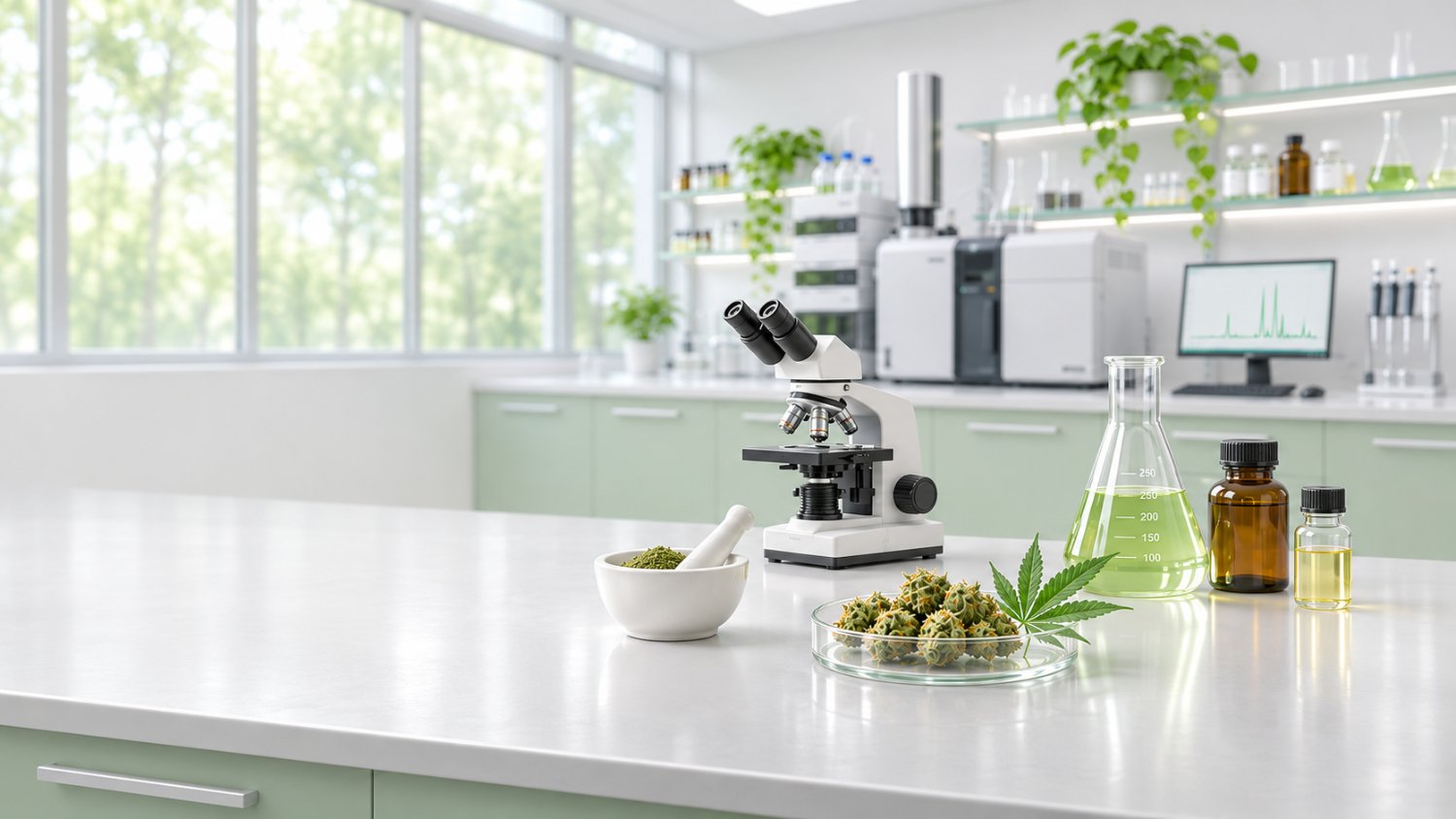
Pesticide testing
Determination of pesticide residues in cannabis by LC-MS/MS and GC-MS chromatographic techniques with a 0.1 ppm limit.
Pesticide screening
Our pesticide screening involves detecting the presence of the monitored compounds at the level of 0.1 parts per million (ppm). Any sample found to contain compounds above 0.1 ppm fails the pesticide control requirements and is considered unusable.
We use chromatographic technologies – a family of analytical methods involving separation, identification and measurement steps that are highly sensitive and automated.
The final list of pesticides is site-specific. It is usually defined by the end users and by legislation, where limits are regulated.
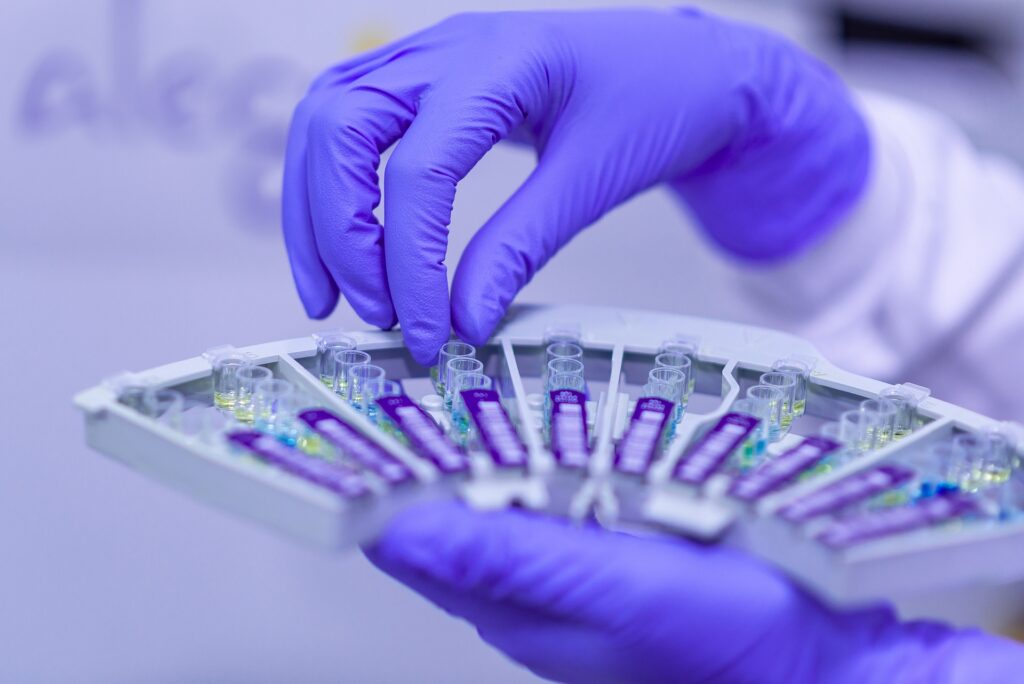
Monitored groups of compounds
We detect their presence at the level of 0.1 ppm
Organophosphates
Carbamates
Pyrethroids
Analytical techniques
The technique is chosen according to the requirements of specific parameters (polar, non-polar)
- 0.1 ppm pesticide control limit
- LC-MS/MS liquid chromatography with tandem mass spectrometry
- GC-MS/MS gas chromatography with (tandem) mass spectrometry – GC-MS, GC-MS/MS
- GC-HRMS gas chromatography with high-resolution mass spectrometry
How the screening works
Separation, identification and measurement – highly sensitive and automated steps
-
1
Sample delivery
Deliver the sample according to the instructions for delivery of samples; on receipt it is registered and prepared for analysis.
-
2
Separation
The compounds in the sample are separated chromatographically (LC or GC depending on the polarity of the monitored substances).
-
3
Identification and measurement
Mass spectrometry identifies the individual pesticides and measures their content.
-
4
Evaluation and report
You receive the results in a report; a sample with a content above 0.1 ppm fails the control requirements.
Contact us
If you have any questions, please do not hesitate to contact us. You can call us or write us an e-mail – we will be happy to help and answer as soon as possible.